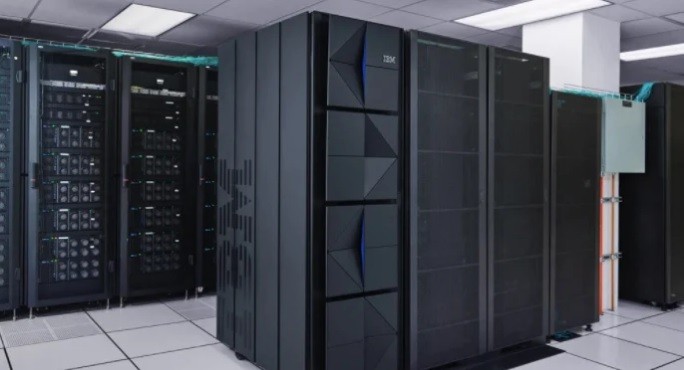
In the IT industry, the term “legacy” is frequently applied to platforms such as the IBM Z mainframe and IBM i. However, this term is not only imprecise but also misleading, and often implies that these systems are outdated, difficult to maintain, and ready for replacement. While this may be true for some older technologies, it is neither accurate nor fair in the context of the IBM Z and IBM i platforms. The IBM Z series, for instance, is far from being a relic of the past: it is a platform that IBM continues to modernize and invests billions of dollars in its development.
The latest IBM Z hardware surpasses distributed and cloud architectures, especially at the enterprise level. These mainframes handle the majority of the world’s financial transactions, thanks to their unparalleled speed and reliability. They also incorporate on-chip AI acceleration for real-time machine learning inference directly on live transaction data, along with integrated cryptography that enables pervasive encryption with minimal performance impact. IBM Z supports modern programming languages like Java, Python, and Node.js, and is compatible with cloud-native technologies, including Linux, containerization, Kubernetes, and Red Hat OpenShift.
Similarly, the IBM i platform is frequently mislabeled as “legacy.” It was revolutionary at its 1988 introduction with an object-based architecture and integrated database, and the platform has significantly evolved for nearly 40 years. Today’s IBM Power systems running IBM i feature a fully integrated relational database, Db2 for i, which is embedded within its architecture. This platform supports modern languages such as Java, Python, Node.js, and PHP, in addition to a modernized RPG. IBM i can expose business logic as REST APIs, thereby integrating seamlessly with contemporary web frameworks. Its reliability is exceptional, and its integrated design results in a lower total cost of ownership, making it a cost-effective and stable choice.
Labeling these platforms as “legacy” introduces a bias that can lead organizations to migrate away from them, only to discover that the replacement environments are more expensive, less reliable, harder to secure, and unable to match the original performance. Instead of using the term “legacy,” more precise descriptors like “proven platforms,” “mission-critical platforms,” “established platforms,” or “enterprise-grade platforms” should be employed. These alternatives acknowledge the longevity, reliability, and scale of IBM Z and IBM i without the dismissive and inaccurate connotation that “legacy” implies. These platforms are not waiting to be replaced; they are actively developed, continuously improved, and deliberately chosen for their unmatched capabilities in handling some of the world’s most consequential workloads.