
Mainframes in Pop Culture: How Misinformation Influences the Real-World Perception of the World’s Most Powerful Computers
Hollywood has always been at the cutting edge when it comes to featuring technology, often showing futuristic devices and objects that simply aren’t real today and may never actually be created. But filmmakers have also sought to balance the fanciful with the authentic by incorporating machines that actually do exist – including mainframe computers – into their movies. Unfortunately, how the film industry portrays mainframes is very different from what they really do, which creates incorrect perceptions that negatively shape popular opinion about these amazing computers.
Perhaps the biggest trope when it comes to mainframes on the silver screen is that they are monolithic all-powerful machines that seamlessly connect to every other computer and mobile device in the world – which is why being able to control a mainframe is the key to controlling the world. This creates a fear factor that taps into general unease about the unchecked power of technology, with mainframes as the major culprit.
One of the earliest and most iconic examples of this comes from the 1983 film WarGames, in which a teenage hacker inadvertently accesses a U.S. military mainframe and nearly triggers a global thermonuclear war. The system, known as WOPR (War Operation Plan Response), is depicted as a sentient, autonomous machine capable of launching nuclear missiles based on misinterpreted signals. The film portrays the mainframe as both omnipotent and out of control, reinforcing the myth that these computers are black boxes of unpredictable, potentially apocalyptic power.
Another classic example is 1982’s Tron, where a programmer is physically pulled into the digital world inside the ENCOM mainframe. Once inside, he must battle the Master Control Program (MCP), an authoritarian AI that has seized control over the entire system. The ENCOM mainframe is depicted as a vast and mysterious digital realm, with seemingly godlike influence over every connected process. The film turned the mainframe into both a physical and philosophical battleground—highlighting the fear of unchecked technological control, even inside a corporation.
Fast forward to 1999’s The Matrix, and mainframes once again take center stage—this time as the foundation of an artificial reality created by machines to enslave humanity. The message? Mainframes aren’t just powerful—they’re insidious, faceless overlords pulling the strings behind the scenes.
Video embed: An Ode to Movie Mainframes
These cinematic portrayals make for compelling drama, but they wildly misrepresent what mainframes are and what they actually do. Rather than controlling the world through deception or destruction, mainframes quietly enable the world to function.
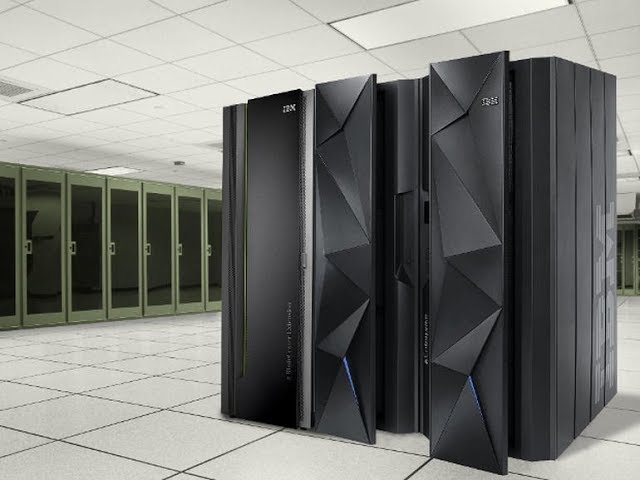
IBM Z mainframes power some of the most critical infrastructure in the world, operating behind the scenes with unmatched security, reliability, and scale. Far from running rogue or initiating wars, IBM Z systems orchestrate more than 30 billion business transactions per day in various ways that enable civilizations around the world to enjoy a seamless and comfortable lives that includes processing ATM withdrawals or completing credit card transactions, flying millions of passengers around the world daily, and even supporting the cellular networks that enable communications across electronic devices.
Mainframes are also essential in the public sector. The US Social Security Administration relies on mainframes to manage benefits for more than 70 million Americans. These systems run continuously with near-perfect uptime to ensure that retirees, people with disabilities, and other beneficiaries receive timely and accurate payments. Similarly, air traffic control systems around the world depend on mainframes to manage flight schedules, coordinate routes, and maintain safety standards in real-time—all without fail.
In banking, mainframes are the backbone of transaction processing and risk analysis. They ensure that millions of global financial transactions are securely processed every second, protecting sensitive customer data and maintaining compliance with financial regulations. In fact, 44 of the top 50 global banks use IBM Z systems, because they trust them to manage high volumes of data with unparalleled security.
What’s more, IBM Z mainframes are not relics of the past—they’re modern, cloud-integrated and highly encrypted AI-ready platforms that continue to evolve. Organizations use them to build and scale hybrid cloud environments, detect fraud in real time, and harness AI for smarter decision-making. They are anything but outdated.
It’s time to rewrite the narrative and give mainframes the credit they deserve—not as villains, but as unsung heroes of the modern world. Perhaps Hollywood should feature the power of the mainframe from a more humanistic perspective, and make it the hero of a modern and civilized society.